This roundup covers the Best AI Tools for Scriptwriting so you can shortlist the right software fast. I wrote it to help you compare nine focused options that can generate or structure a screenplay, video script, or scene idea with less effort.
I will keep each tool’s section consistent: a short overview, core features, pros and cons, and a clear best-for note. That way you can compare at a glance and match a product to your projects and needs.
Expect highlights like instant prompt generation, storyboards, previz, Beat Boards, Index Cards, and secure collaboration for teams and creators. I will also note which choices suit film production versus social clips or YouTube content.
Key Takeaways
- I outline five dedicated options focused on best AI tools for scriptwriting and structure.
- Each entry follows the same format to ease comparison.
- Features include story ideation, video prep, and collaboration tools.
- I flag which tools suit filmmakers, channel creators, or solo writers.
- You’ll get practical notes on workflow, pricing themes, and next steps.
Why I Trust AI for Scriptwriting in the present
I trust focused script software because it speeds idea-to-draft work without distracting my process. These platforms streamline development and keep me on the story instead of on formatting or busywork.
Practical protections matter. NolanAI’s emphasis on ethics and encrypted analysis, plus Studiovity’s watermarking and permissions, give me confidence when I share drafts with a team. That support preserves ownership and lets critique flow safely.
Shortly AI helps push through writer’s block by continuing my draft in my voice. AI Screenwriter adds real industry guidance; it was built by veterans who worked on big productions, so its suggestions feel grounded in practice.
- I rely on instant outline and scene-level help that frees my creativity for dialogue and character.
- I prefer software that balances automation with control so I can shape tone and pacing.
- Having options matched to different goals keeps each script and short video efficient and focused.
Later sections review each platform in detail and compare features, pricing, and workflow. If you want a quick primer on creative writing and copy workflows, check this short guide: copywriter recommendations.

Best AI Tools for Scriptwriting in the present: My Shortlist
I narrowed nine script platforms that help me move ideas to formatted drafts fast. Each entry below has a short overview of best AI tools for scriptwriting covering core features, pros and cons, and a quick best-for note.
Quick Summary Table: Best AI Tools for Scriptwriting
| Tool Name | What It Does | Best For |
| Saga | Turns ideas into scripts, storyboards, and early previews. | Directors and creators who want strong planning and shot ideas. |
| NolanAI | Checks scripts, keeps them safe, and helps from early to late writing stages. | Teams handling private or sensitive scripts. |
| Melies | Mixes writing with images, video, and sound. | Visual storytellers who want multimedia tools. |
| AI Screenwriter | Follows real movie rules and gives pro structure help. | Writers who want studio-style guidance. |
| Studiovity | Helps teams organize scripts, notes, and tasks. | Groups working together on scripts or film projects. |
1. Saga
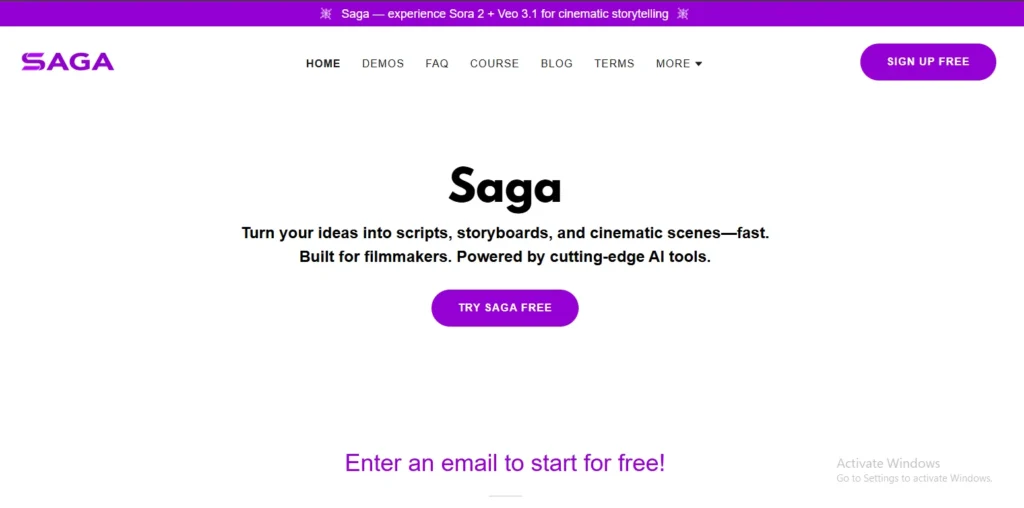
I explored Saga to see how it turns a small idea into a full movie story. The tool keeps the workflow professional: it creates scripts, storyboards, and early previews. It stands out as a strong pick for anyone who needs AI for scriptwriting and pre-production.
Overview
Saga builds deep cinematic narratives using specialized AI. The platform handles the heavy lifting of drafting and visualization so filmmakers can see their work before filming. It provides creators with a structured path from a basic concept to a finished script.
Core features
- Story development tools shape a basic idea into a full, detailed narrative.
- Camera notes show exactly how the director should frame each specific shot.
- Planning tools keep every scene in the correct order throughout the process.
Pros and cons
- Pros: This tool suits directors who love planning; you can see the movie before you film it.
- Cons: You may need extra time to learn the system; the many tools can feel overwhelming at first.
Best for
I recommend Saga for people who want deep shot planning and strong story tools. It perfectly fits filmmakers who prefer a detailed and organized approach to their storytelling.
| Spec | Details | Why it matters |
| Focus | Scripts & Storyboards | Small ideas are turned into professional movie stories |
| Visuals | AI Camera Notes | Every shot is planned out before the cameras roll |
| Planning | Scene Organization | Scenes are kept in order for a smooth workflow |
| Capability | Early Previews | The story is visualized early to catch potential issues |
2. NolanAI
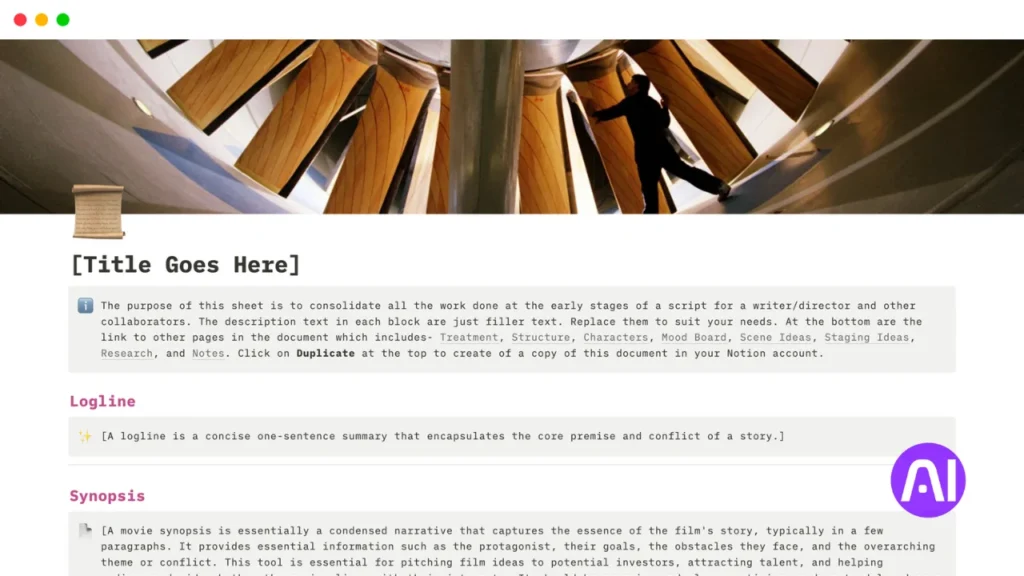
I tested NolanAI to see how it manages a script from the first draft to the final security checks. The platform keeps the workflow secure by refining ideas and automating formatting. It is a top choice for teams who need professional script analysis without compromising privacy.
Overview
NolanAI offers a secure scriptwriting suite designed for safe story development. It provides helpful notes on your writing while protecting your work from leaks. It serves as a reliable pick for creators who need a private, production-ready environment.
Core features
- Script analysis checks your writing quality and identifies potential plot holes.
- Security tools keep your sensitive scripts locked and completely private.
- Production checks help you prepare the story for the actual filming stages.
Pros and cons
- Pros: The privacy tools are exceptionally strong; the platform manages large projects with ease.
- Cons: Beginners may find some features too advanced; a paid plan is usually required for the best tools.
Best for
I recommend NolanAI for teams working with private or sensitive scripts. It is a solid pick for those who want a secure workspace that balances creativity with high-level data protection.
| Spec | Details | Why it matters |
| Security | Encrypted & Private | Sensitive scripts are kept safe from leaks |
| Formatting | Industry-Standard | The script is made ready for professional review |
| Analysis | AI Script Reports | Story weak points are caught before production |
| Workflow | Draft to Breakdown | The process is streamlined from idea to filming |
3. Melies
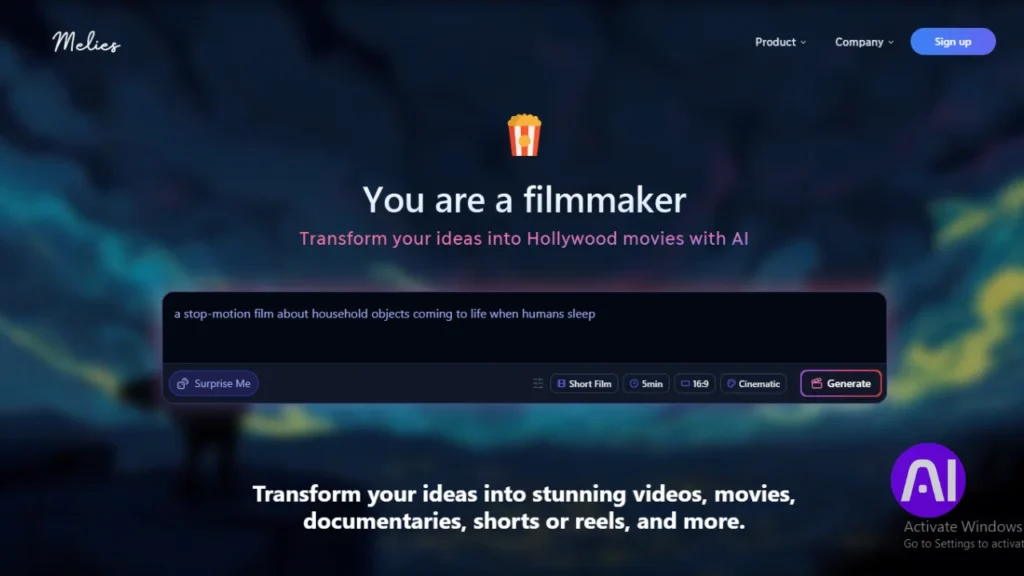
I used Melies to see how a script blends with pictures, videos, and sound. The workflow is creative: you outline the story and add media assets to make the script feel alive. It is a top pick for visual creators who want their writing to jump off the page.
Overview
Melies is an AI platform that mixes traditional writing with rich visual and audio tools. It helps you shape complete stories using outlines while you integrate images and sound directly into the process.
Core features
- Story outlines shape your script and give the narrative a clear structure.
- Genre templates jumpstart your ideas for many different types of films.
- Media tools allow you to edit images, video, and sound all in one place.
Pros and cons
- Pros: It is excellent for visual storytellers; you can easily add media directly to any script.
- Cons: The interface might feel like too much for simple writing; it provides more tools than some writers need.
Best for
I recommend Melies for creators who want to see and hear their stories as they write. It is the best fit for filmmakers who need a multi-media workspace to create visual previews.
| Spec | Details | Why it matters |
| Media Support | Video, Image, & Sound | Stories are transformed into immersive experiences |
| Templates | Multi-genre Options | The writing process is sped up with pre-set beats |
| Output | Visual Scripts | A clear vision is created for producers to see |
| Integration | All-in-one Editor | No need to switch apps for media and text |
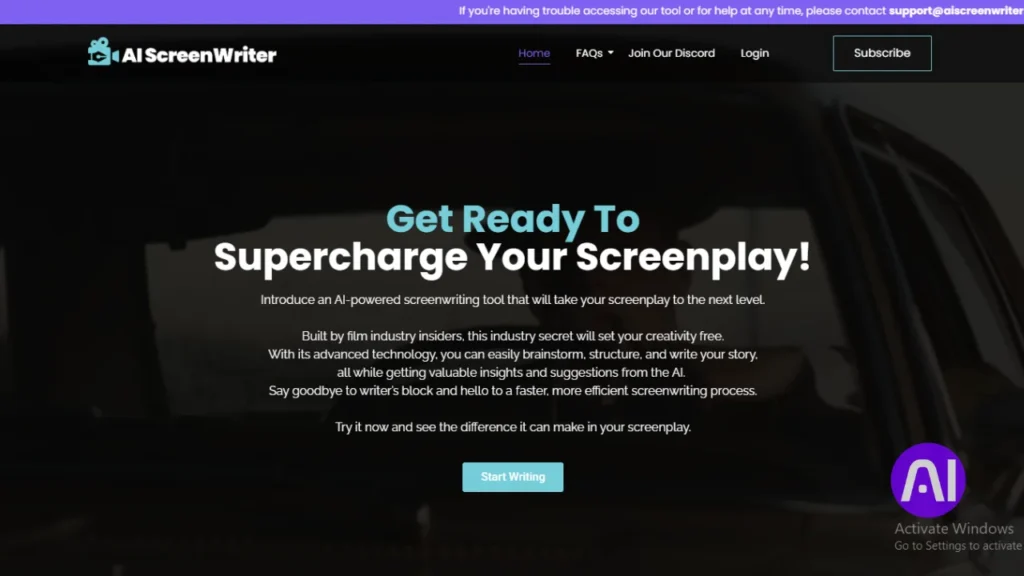
4. AI Screenwriter
I looked at AI Screenwriter to see how it uses expert rules to keep scripts professional. The workflow is focused: you build scenes using real-world movie standards to ensure a studio-ready result.
Overview
AI Screenwriter is a structured tool designed to provide professional-level guidance for writers. Industry standards are applied to every draft to help creators build balanced and impactful movie scenes.
Core features
- Pro templates are provided to match the formats used by major film studios.
- Structure guidance is used to keep the story balanced and the pacing consistent.
- Scene note tools are included to allow for clear and organized planning.
Pros and cons
- Pros: Feedback is given like a real studio reader; scripts are kept exceptionally clean.
- Cons: The structure may feel too strict for some; it works best for writers who like rules.
Best for
AI Screenwriter is recommended for writers who want to follow real movie standards. It is a top pick for those aiming for a professional, studio-level script structure. to follow real movie standards. It is a top pick for those aiming for a professional, studio-level script structure.
| Spec | Details | Why it matters |
| Standards | Studio-level Rules | The script is formatted to meet high industry expectations |
| Logic | Structural AI | Pacing issues are identified and fixed early on |
| Guidance | Pro Scene Notes | Planning is kept focused on what makes a scene work |
| Output | Clean Drafts | The final file is ready for submission to agents or studios |
5. Studiovity
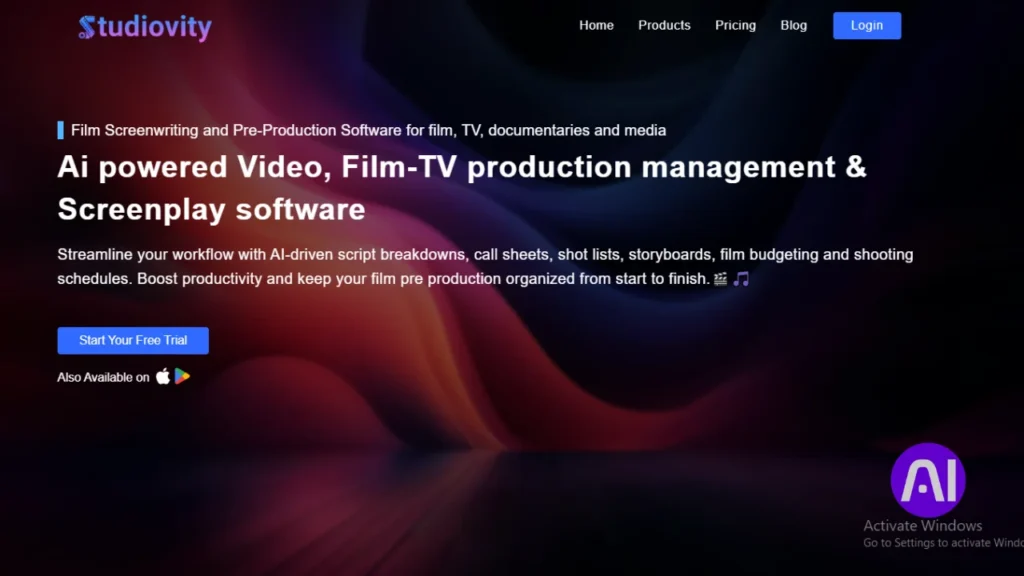
I tested Studiovity to see how effectively teams can collaborate on a single script. The process is organized: you track notes, tasks, and scenes in a shared space to keep everyone on the same page.
Overview
Studiovity is a collaborative production tool that focuses on keeping writing teams organized. You plan story beats and move scenes around easily to manage even the largest writing projects.
Core features
- Beat Board helps you plan story beats and map out your narrative flow.
- Index Cards allow you to move and reorganize scenes quickly for better pacing.
- Final Draft support makes importing and exporting professional files easy for sharing.
Pros and cons
- Pros: It is excellent for teams working on one script; big projects are much easier to manage.
- Cons: The platform might feel too heavy for solo writers; the many tools take time to explore.
Best for
I recommend Studiovity for teams who need to stay organized and share work easily. It is best for group projects where you need to track tasks and scene changes in real-time.
| Spec | Details | Why it matters |
| Collaboration | Multi-user Access | Entire writing teams can work together without version issues |
| Flexibility | Digital Index Cards | The story structure can be shifted and tested instantly |
| Compatibility | Final Draft Export | The workflow stays connected to industry-standard software |
| Planning | Task Management | Writing goals and deadlines are kept in one central location |
How I choose scriptwriting tools for different creators
My selection starts with how a program balances power and simplicity. I want depth when craft matters and speed when deadlines press. That balance guides every score I give.
Feature depth vs. ease of use
I score features against ease of use by asking whether the editor speeds scene, character, and description work without adding friction. A good feature appears when you need it; a Beat Board during structure, an Index Card view for pacing.
I favor software that offers templates and Smart Writer help for quick drafts, yet lets me switch to manual control when craft matters. Onboarding time matters; a steep learning curve can kill momentum on short projects.
Security, ownership, and export flexibility
Collaboration must respect ownership. NolanAI’s encryption and Studiovity’s watermarking and permission layers check that box for me. I require audit trails and role-based permission to keep shared drafts safe.
Export flexibility is non-negotiable. Final Draft import/export, clean PDF output, and the option to print or ship hard copy keep scripts moving between teams. I also weigh project management views and progress tracking when production deadlines decide tools that work.
Pricing, plans, and value across these scriptwriting tools
I look at how much real script help each tool gives for the money. This makes it easier to choose a plan that fits the speed of your writing, your team size, and your project load. These tools all appear in the best AI tools for scriptwriting, but each one gives a different kind of value.
I check things like project limits, collaboration tools, export options, and creative support. These help me understand which tool gives the best return for the work you need to do.
- Saga gives strong value for visual planning, storyboards, and camera breakdowns, best for creators who work with lots of scenes.
- NolanAI offers top security and script analysis, making it great for writers handling private or sensitive work.
- Melies adds value through images, videos, and sound tools, perfect for visual storytellers who want multimedia features.
- AI Screenwriter delivers pro movie structure and templates, ideal for writers who want studio-style guidance.
- Studiovity brings team value with Beat Boards, Index Cards, and collaboration tools, replacing multiple planning apps.
| Platform | Key Value | Best Plan Fit |
|---|---|---|
| Saga | Visual planning, storyboards, shot tools | Writers or directors who need visual planning |
| NolanAI | Strong security + automated analysis | Writers or teams needing IP control |
| Melies | Writing + image, video, and sound tools | Visual creators and multimedia storytellers |
| AI Screenwriter | Pro templates + structure guidance | Writers needing studio-style support |
| Studiovity | All-in-one planning + collaboration | Teams managing full preproduction |
Workflow tips to get more from AI script generators
I use a clear, repeatable process to carry voice and pacing from an outline into each scene. Start with structured writing so your scenes inherit beats and rhythm instead of drifting.
From outline to scene: keeping your voice consistent
I write a short style paragraph of sample dialogue and description. I feed that to the generator so tone and character voice stay steady.
- Create an outline with tools like Squibler or Jasper, then turn each index card into a focused scene.
- Draft dialogue first, then add brief action beats and sensory description using a Describe feature.
- Apply tone adjustments and automatic error checks (Studiovity) before focused editing passes on dialogue.
| Step | Tool example | Purpose | Quick tip |
|---|---|---|---|
| Outline | Squibler | Map acts and beats | Export cards to scenes |
| Scene draft | Shortly | Continue in your voice | Prompt “dialogue first” |
| Tone check | Studiovity | Adjust voice & errors | Run tone tool before edit |
| Runtime trim | Jasper / Synthesia | Fit video cadence | Trim lines to spoken length |
Adjacent options to explore if your needs evolve
When a script moves toward shooting or online release, I add platforms that handle image, motion, and logistics. This keeps drafts tied to real production needs and speeds the path from page to picture.
Synthesia turns text into short motion quickly, so you can test pacing and timing without a full shoot. Melies pairs image, video, and sound generation with built-in editing to prototype scenes fast. Studiovity takes the screenplay further by adding breakdowns, shot lists, schedules, and call sheets.
I watch for features that help when scripts change on set. Versioning, inline annotations, and format-safe exports keep revisions tidy. Batch generators and storyboard exports save time when you make many videos at once.
- Use text-to-video if you want quick motion from a script draft.
- Choose multimedia editors when visuals and temp sound matter early in the edit.
- Pick production suites to centralize schedules, cast, and locations around your scripts.
| Need | Quick option | When to pick |
|---|---|---|
| Turn scripts into motion | Synthesia (text-to-video generator) | Prototype pacing and voiceover |
| Multimedia prototyping | Melies (image, video, sound, editing) | Visualize scenes and temp edits |
| Full production management | Studiovity (breakdowns, schedules, call sheets) | Coordinate shoots and departments |
Pairing a screenplay with storyboards or temp visuals brings characters to life and trims guesswork during shooting. When teams iterate often, centralizing elements and export formats keeps scripts, notes, and schedules in sync through production.
Conclusion
In conclusion, I weigh which platforms remove friction from script generation and collaboration so writers can move ideas to polished scripts fast.
I covered dedicated options that span outline tools, full screenplay generation, visual prototyping, and secure management. Squibler, Studiovity, Jasper, Synthesia, NolanAI, Saga, Melies, Shortly AI, and AI Screenwriter each target different needs.
Pick the feature set you will use weekly: rapid generation and progress tracking, export fidelity and permissions, or multimedia prototyping. That focus helps a writer choose the right fit for projects and team management.
If you want a side-by-side refresher or to dive back into each review, check this short roundup: top script generation comparison. Run a full draft end-to-end; the tool that removes friction will lift your storytelling and help you ship better scripts.
FAQ
What kinds of script projects can these tools handle?
I use these platforms for a wide range of projects, from short video scripts and commercials to feature-length screenplays and episodic TV outlines. Some tools focus on character dialogue and scene structure, while others help with production-ready formats and visual storyboards. I pick a tool based on project scope and delivery needs.
How do I keep my personal voice when using a generator?
I keep my voice by creating a clear prompt kit: tone notes, character bios, sample lines, and scene goals. I iterate generate, edit, then regenerate with tighter constraints a I also maintain a personal style guide and paste it into every session so outputs match my rhythm and phrasing.
Are my scripts secure and who owns the content?
I always review each service’s terms. Many platforms grant users ownership of what they create, but some retain rights to use anonymized data for improvement. I favor providers that offer explicit ownership clauses, encryption in transit, and clear export options so I can store backups in my own systems.
Which tool is best for collaborative writing with a team?
I prefer tools with real-time collaboration, version history, and comment threads. Solutions that integrate with Google Drive or offer in-app coauthoring let me work smoothly with producers, directors, and co-writers. I look for role-based permissions to control edits and approvals.
Can these platforms format to industry-standard screenplay layouts?
Yes, many include industry templates that export to Final Draft (.fdx), PDF, or plain text formatted for screenplay specs. I test exports early to ensure margins, sluglines, and dialogue align with union and production expectations before delivering drafts.
How much manual editing will I still need to do?
I usually treat generated drafts as structured first passes. Expect to trim exposition, refine character arcs, and tighten dialogue. The degree of editing depends on the prompt quality and the tool’s strengths—some produce strong dialogue but weaker scene transitions, others nudge structure but need tone adjustments.
Do these generators help with character development and arcs?
Many include character profile builders and arc-mapping features. I feed them character goals, flaws, and stakes, then use suggested beats to shape rising action. They speed up variation testing, but I still craft and humanize final arcs manually.
What should I look for when choosing a subscription plan?
I compare monthly usage limits, export formats, collaboration seats, and access to premium models or features like voice cloning, video generation, or advanced outlining. I calculate cost per project and favor plans that scale as my workload grows without hidden fees.
Are there offline options or backup exports if I lose access?
I always export copies like PDFs, FDX, and plain text, so I can continue work offline. Some platforms offer desktop apps or offline modes; if they don’t, exporting regularly ensures I retain full control over my work.
How do I integrate these tools into an existing workflow with editors and producers?
I set up shared folders, sync exports with project management tools, and agree on file naming conventions. I present generated drafts as labeled iterations, include a change log, and use collaborative features to collect feedback directly on the script files.
Can I use these platforms to create video or storyboard assets as well?
A few services combine script generation with video or storyboard export. I use those when I need quick visual references or animatics. For final storyboards or production visuals, I still work with professional artists or dedicated storyboard software.
Will these tools replace professional writers?
I see them as amplifiers, not replacements. They speed up ideation, structure, and repetitive tasks, freeing writers to focus on nuance, emotional beats, and original storytelling. The craft and judgment of an experienced writer remain essential.
How do I evaluate the quality differences between platforms?
I run the same prompt across several services, compare dialogue naturalness, scene coherence, and how well outputs follow notes. I score based on edit time required, export fidelity, and collaboration ease. This hands-on testing reveals which tool fits my process best.
Are there accessibility features I should expect?
Many platforms offer keyboard shortcuts, screen-reader compatibility, and font adjustments. I check accessibility support if team members rely on assistive tech, and I prioritize tools that follow web accessibility guidelines.
What adjacent tools should I consider as my needs grow?
I often add version control like Git for scripts, production scheduling tools, rehearsal platforms, and dedicated storyboard or editing software. These help move a script from draft to screen with fewer bottlenecks.