I tested a range of dedicated, AI-driven solutions that blend chat interfaces, OCR, and conversion pipelines to move content between formats with less friction.
My hands-on tests covered long contracts, research papers, scanned forms, and graphics-heavy files to judge conversion accuracy, layout retention, and real-world usability.
I focused on suites that add meaningful automation rather than basic utilities. That meant reviewing AskYourPDF, Adobe Acrobat Pro with AI, PDFelement Pro, Kofax Power PDF, Foxit PDF Editor, UPDF, WPS, PDFgear, LightPDF, and PDF Guru.
I explain how I scored each option, why content understanding and OCR matter, and how I balance conversion quality with intelligent assistance so you save time. For a quick look at one of the top contenders, see this pdf converter review.
Key Takeaways
- I tested 7–10 focused suites to compare real project performance.
- OCR, structure detection, and chat features speed up content creation.
- Each review follows the same short overview, core features, pros and cons, and best for.
- I balanced conversion accuracy and smart assistance equally when rating options.
- Pricing, device support, and cloud integration are part of the decision criteria.
Why I Chose These AI PDF Converter Picks for Real-World PDF Files
I designed a hands-on checklist to judge how well real-world pdf files survive conversion, editing, and review under pressure. My goal was to match each solution to real jobs: freelancers, for small businesses, and enterprise workflows.

My testing criteria
I measured accuracy on complex layouts, OCR on low-quality scans and mixed languages, and form recognition reliability. I timed large exports and noted where formatting or layout shifted during document conversion.
Commercial intent match
I mapped results to user needs. For example, conversational editing and cross-document context suit knowledge workers. Enterprise security and automated redaction serve compliance-heavy teams.
- I follow a clear step-by-step test plan so results reflect real use with live pdf documents.
- I check whether text, tables, and images keep structure; small layout changes can break contracts or spreadsheet math.
- I push OCR on scanned research and mixed-language pages to see if engines read text and preserve formatting.
- I compare collaboration, cloud integration, and pricing so you can pick the right fit for your data and team size.
| Focus | What I tested | Who benefits |
|---|---|---|
| Layout & formatting | Complex pages, tables, graphics | Legal, finance, design teams |
| OCR & language | Low-res scans, multilingual text | Researchers, translators |
| Collaboration & compliance | Redaction, version control, audit trails | Enterprises and regulated groups |
| Speed & value | Timed exports, pricing tiers | Freelancers and small teams |
That framework kept reviews consistent and made it easy to understand which product features matter for different document workflows. It also helped me call out where specific strengths like conversational editing or form intelligence make a real difference in conversion quality and day-to-day use.
Best AI PDF Converter Tools
I reviewed a lineup of ten document-focused apps to measure clarity, layout retention, and export accuracy under real workloads.

1. AskYourPDF
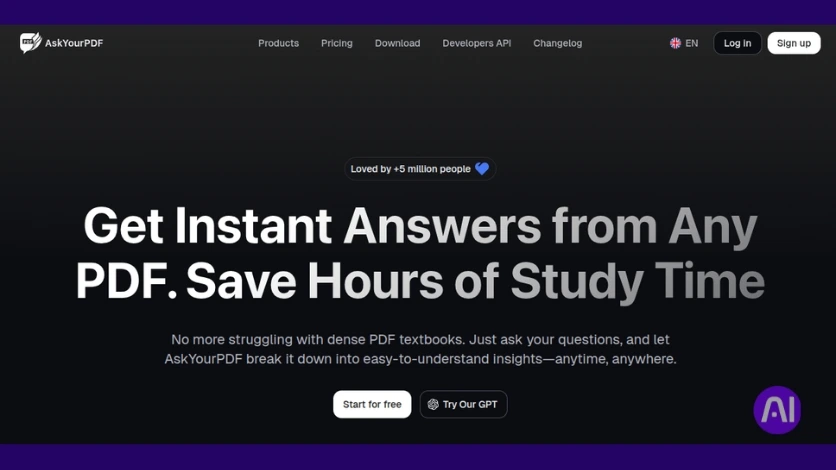
I like its conversational approach when I need to locate clauses or reorganize long pdfs quickly.
- Core features: chat with documents, multi-file search, summaries, multilingual support, cloud export to Word.
- Pros: strong context handling and clear instructions.
- Cons: needs steady connectivity and prompt learning.
- Best for: professionals who need fast insights and accurate exports.
2. Adobe Acrobat Pro
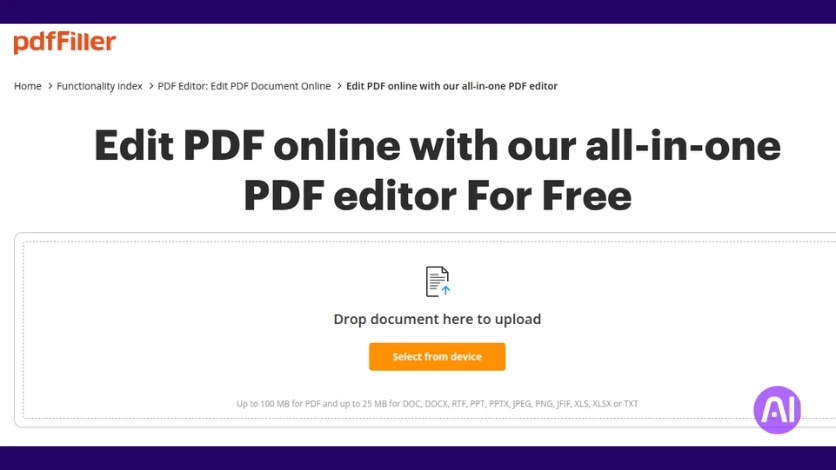
I rely on Adobe for stable editing and high OCR accuracy across complex files.
- Core features: AI-assisted editing, content reflow, advanced OCR, form detection.
- Pros: mature editing tools and reliable scans.
- Cons: higher price and a learning curve.
- Best for: teams needing robust editing and forms.
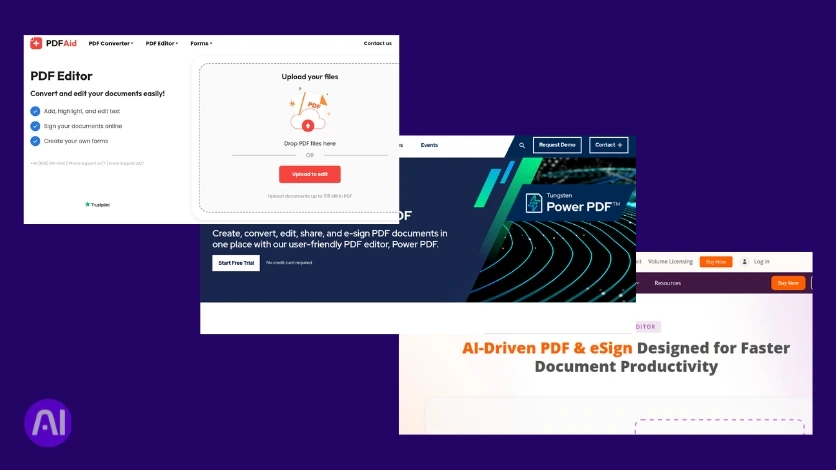
| Tool | Strength | Ideal users |
|---|---|---|
| 3. PDFelement Pro | Summaries, translation, batch work | Cost-conscious users |
| 4. Kofax Power PDF | Redaction, sorting, compliance | Legal and finance |
| 5. Foxit PDF Editor | Cross-device collaboration | Mobile professionals |
How These Tools Handle Conversion Formats, OCR, and Layout Preservation
I checked how each app moves pages and tables into editable Word, Excel, and web-ready HTML while watching for layout drift.
I mapped supported formats to practical needs. UPDF exports to Word, Excel, PowerPoint, HTML, text, XML, and images and adds batch conversion with OCR for scanned pdfs. Adobe Acrobat Pro improves OCR accuracy and reflows content during edits. Foxit provides Scan and OCR to turn scans into editable text. PDF Guru covers DOCX, XLSX, PPTX, JPG, PNG and niche outputs like DWG and EPUB with OCR support.
I tested layout retention by exporting pages with headers, footers, multi-column text, and tables. Reflow mattered most when I edited content before export; Adobe kept paragraphs aligned best after edits. UPDF and PDF Guru handled tables well, though some fonts shifted in heavy layouts. Foxit was fast but required manual fixes on challenging scans.
OCR quality varied by engine and language. Adobe led on mixed-language pages. UPDF and PDF Guru gave consistent results for batch jobs. Kofax added automated classification and redaction for enterprise data workflows.
| Product | Formats | OCR & Speed | Layout Notes |
|---|---|---|---|
| UPDF | Word, Excel, PPT, HTML, XML, images | Batch OCR; good speed on bulk files | Good table retention; some font shifts |
| Adobe Acrobat Pro | Word, Excel, HTML, text, images | High OCR accuracy; strong on mixed languages | Best content reflow after edits |
| Foxit | Word, text, images | Fast Scan & OCR; occasional misses on poor scans | Good for simple layouts; needs checks on complex pages |
| PDF Guru | DOCX, XLSX, PPTX, JPG/PNG, DWG, EPUB | Browser OCR; solid for quick web uploads | Flexible outputs; useful when no desktop app is available |
Tip: select a page range before export to speed work and reduce errors. I also used summarizers in some apps to clean content before conversion, which improved final text and cut editing time.
Editing, Summarizing, and Understanding PDF Content Before You Convert
I always prepare files before I export. Working with chat features and a pdf summarizer cuts editing time and improves final layout. Preparing content first helps exports stay accurate and readable.
Chat with PDFs, summarizers, and content reorganization for long PDFs
I use AskYourPDF to ask targeted questions across multiple documents. That helps me locate clauses, compare sections, and pull quick summaries so I know which pages to convert.
PDFelement Pro’s pdf summarizer and translation save time when I need to understand content in another language. UPDF’s Ask PDF clarifies tricky passages while keeping layout intact.
PDFgear and LightPDF let me run multi-file chats for research. I extract data points fast and pick only the pages I cleaned for export. That reduces file size and post-export fixes.
- I prompt for an outline or concise brief to plan a targeted conversion.
- I fix small text fragments and align headings before export to avoid format drift.
- I save a tracked-changes version when available to compare document content after export.
| Feature | When I use it | Benefit |
|---|---|---|
| Multi-doc chat | Literature reviews | Faster reference locating |
| Summarizer | Long pdfs | Quicker content overview |
| Reflow/edit guidance | Before pdf editing | Preserves structure on export |
Workflow, Cloud, and Cross-Device Experience
My workflow centers on keeping files and versions in sync so I never edit the wrong copy. Linking cloud storage cuts time hunting for the latest document and keeps formatting consistent across machines.
Integrations and enterprise connections
AskYourPDF links to Google Drive, Dropbox, and OneDrive so new pdf files appear instantly. Kofax adds enterprise connectors and automated redaction to protect sensitive data and speed routing.
Desktop, web, and mobile parity
Foxit keeps menus and options similar across desktop, web, and mobile, so I avoid surprises when I switch a device. PDF Guru runs in the browser and is handy on shared machines. UPDF gives native Windows and Mac apps plus Android and iOS support for light edits on the go.
- I pick installed suites for heavy edits and website-first services for quick fixes and sharing.
- I check sharing controls: link access, expiration, and permission levels before I send files for review.
- When I travel, I keep local copies and queued conversions to run when I reconnect.
| Product | Integrations | Deployment | Mobile parity | Offline options |
|---|---|---|---|---|
| AskYourPDF | Google Drive, Dropbox, OneDrive | Web + extension | Limited | Local downloads |
| Foxit | Cloud storage | Desktop, Web, Mobile | High | Cached files |
| Kofax Power | Enterprise CMS | On-premise, Cloud | Medium | Sync clients |
| PDF Guru / UPDF | Cloud uploads | Browser-first / Native apps | Good | Queued conversions |
Pricing, Free Limits, and Which Plan Fits Your Job
I begin price checks by counting users, monthly file volume, and any chat or pdf summarizer limits. That helps me match plans to real work and avoid surprise bills.
Free tiers vary a lot. UPDF gives two free conversions per day and has yearly and perpetual plans. Foxit offers a 14-day trial; Mac and Windows builds differ in optimization. PDFgear is usable at no cost but can be less accurate on the free tier. LightPDF caps file sizes and limits offline features and AI models. Kofax offers one-time licenses for some editions, which fits procurement cycles.
How I test limits and avoid surprises
I time exports and run the pdf summarizer on representative files. I note watermarks, file-size caps, and daily convert pdf counts so I know what I can finish within a deadline.
| Option | Free / Trial | Notes |
|---|---|---|
| UPDF | 2 free conversions/day | Yearly or perpetual plans; AI add-ons quarterly/yearly |
| Foxit | 14-day trial | Test large formats and Mac vs Windows behavior |
| LightPDF / PDFgear | Limited free tier | File-size and AI caps; PDFgear may reduce accuracy free |
When I choose between subscription and perpetual, I weigh update frequency and team size. Subscriptions suit fast-moving teams that need regular updates. Perpetual licenses work well for fixed budgets and stable workflows.
For a clear price reference on conversational features and limits, I check AskYourPDF pricing before I commit: AskYourPDF pricing.
Conclusion
After hands-on comparisons, I distilled practical guidance so you can choose a suite quickly and with confidence.
I focused on dedicated, intelligent solutions and applied the same review framework to every option. That makes side‑by‑side comparison easier when you evaluate features like conversational editing, OCR and reflow, summaries, compliance, cross‑device parity, or browser-first convenience.
Prepare content first with chats and summarizers to save time and improve export results, especially on long pdfs with complex layout and tables. Test your top two picks using the formats you use most and check layout retention before you commit.
Note your monthly document volume and required outputs so you avoid caps mid‑project. Pair a good summarizer with a reliable converter when needed, and watch for updates—OCR and structure detection keep improving.
My simple rule: pick the option that reduces steps, protects your document, and keeps formatting consistent across the formats you share most.
FAQ
How do I choose the right PDF conversion tool for my needs?
I look at accuracy, supported formats, OCR quality, layout preservation, speed, ease of use, and price. For individual use I favor simple interfaces and good free limits. For teams, I pick tools with cloud integrations, collaboration features, and enterprise licensing. I also test with real documents to see how each tool handles text, images, tables, and scanned pages.
Which file types can these tools convert from and to?
Most tools convert between Word, Excel, PowerPoint, HTML, plain text, and common image formats like JPG and PNG. Many also export searchable PDFs, editable documents, and image-only PDFs. I always check export settings to keep tables and fonts intact.
How well do they handle scanned documents and OCR?
OCR quality varies. Top apps deliver accurate text recognition, preserve layout, and support multiple languages. OCR speed depends on file size and processor or cloud service. I recommend testing a few sample scans to compare accuracy and the need for manual cleanup.
Can I edit text and images inside a converted document?
Yes. Most editors let you change text, move or replace images, edit headers and footers, and reflow paragraphs. Some offer advanced features like redaction, form field creation, and batch edits. I prefer tools that keep formatting stable after edits.
Do these tools preserve original layout and formatting?
They generally preserve layout well for simple documents. Complex layouts with multi-column text, embedded fonts, and intricate tables can require tweaks. I recommend tools with a strong layout engine and options to embed fonts or keep images at original resolution.
Are there limits on file size, pages, or daily conversions?
Free plans often set file-size caps, daily conversion limits, or watermark output. Paid plans remove many limits and add batch processing. I check each provider’s free tier and trial so I know whether it fits a one-off job or ongoing workloads.
How secure is my data when I upload documents to an online service?
Security varies. Reputable services use encryption in transit and at rest, plus privacy policies that explain retention and deletion. For sensitive documents I prefer desktop apps or cloud services with enterprise-grade compliance like SOC 2 or GDPR statements. Always review a provider’s security page.
Can these tools summarize or help me understand long documents?
Several platforms include summarizers or chat-with-document features that extract key points, generate summaries, and answer questions about content. These help with long reports, contracts, or research papers. I test summarizers on long PDFs to check accuracy and context retention.
Which platforms work across desktop, web, and mobile?
Many vendors offer desktop apps for Windows and macOS, web apps for browser access, and mobile apps for iOS and Android. I prioritize tools that sync via Google Drive, Dropbox, or OneDrive so formatting and progress stay consistent across devices.
Should I pick a perpetual license or subscription for team use?
It depends on budget and update needs. Perpetual licenses can be cheaper long term but may lack new features. Subscriptions provide updates, cloud features, and support. For teams that need collaboration and cloud integrations, a subscription often makes more sense.
Are there notable differences in speed between desktop and cloud conversions?
Desktop conversions often run faster for large files because they use local CPU and avoid upload time. Cloud services can be quicker for smaller files or when heavy server-based OCR is used. I weigh file size, network speed, and privacy when choosing between them.
How do I handle conversion of complex elements like tables, forms, and annotations?
Look for tools with dedicated table detection, form recognition, and annotation support. Some editors let you export tables to Excel with structure intact. I test a representative document containing tables and forms to see how much manual correction will be needed.
Can I integrate these tools with Google Drive, Dropbox, or Microsoft 365?
Yes. Many services offer built-in integrations or connectors so you can open, save, and automate workflows. For enterprise setups, I verify support for Single Sign-On and API access to integrate with document management systems.
What is the best approach for converting a large batch of files?
Use tools with batch processing or command-line interfaces, and consider a desktop solution to avoid upload bottlenecks. If you need automation, look for APIs or cloud workflows that support bulk jobs and error reporting. I usually run a small pilot batch first to catch formatting issues.
How do pricing and trial limits affect which plan I should pick?
Compare free limits, trial periods, watermark policies, and file-size caps. If you work with many large files or need advanced OCR and collaboration, budget for a paid plan. I map expected monthly usage against plan limits to choose the most cost-effective option.
Can I preserve searchable text and metadata when converting?
Yes. Most converters keep searchable text and let you maintain or edit metadata like title, author, and keywords. Ensure OCR is run on scans to make them searchable and check metadata options during export.
What accessibility features should I look for in a conversion app?
Prefer tools that support tagged PDFs, alt text for images, reading order editing, and validation against accessibility standards. These features help screen readers and meet compliance requirements. I test exported files with an accessibility checker when this matters.